Beauty Score Explained: How AI Rates Your Face
A practical guide to score ranges, photo variables, accuracy limits, bias, privacy, and fair photo comparisons.

On this page
- Quick answer: what does a beauty score mean?
- What a beauty score measures
- How an AI beauty score is produced
- How to read score ranges
- Why the same face gets different scores
- Accuracy, bias, and limits
- A repeatable way to compare photos
- Privacy and safer use
- Useful ways to apply the feedback
- Frequently asked questions
A beauty score looks precise because it turns a face photo into a number. The number is still an estimate, not a universal measurement of beauty. It reflects the patterns a particular model learned, the way the image was captured, and the scale chosen by the service.
That is why one portrait can receive a high score while another photo of the same person lands lower. Soft light, a straight camera angle, a relaxed expression, and a clean crop give a model different evidence from a dark selfie, a wide-angle lens, or a heavily filtered image.
This guide explains what a beauty score usually measures, how an AI face rating is produced, how to read ranges without overclaiming, and how to compare photos in a fairer way. It also covers bias, privacy, and the parts of attractiveness that a score cannot see.
Quick answer: what does a beauty score mean?
A beauty score is a model-generated estimate of how one photo matches visual patterns found in labeled examples. Depending on the service, it may appear as a 1–10 rating, a percentage, a percentile, a grade, or several sub-scores. The label changes, but the result is still tied to a specific image and a specific model.
Use the number to ask better photo questions: Is the face easy to see? Is the crop balanced? Does the lighting hide important features? Would a different expression make the portrait feel more approachable? Do not use it to decide whether someone is objectively attractive, normal, worthy, or likely to succeed socially.
Practical rule
Treat a beauty score as structured feedback about one photo. A change between two images is information about the images, not proof that your underlying appearance changed.
What a beauty score measures in practice
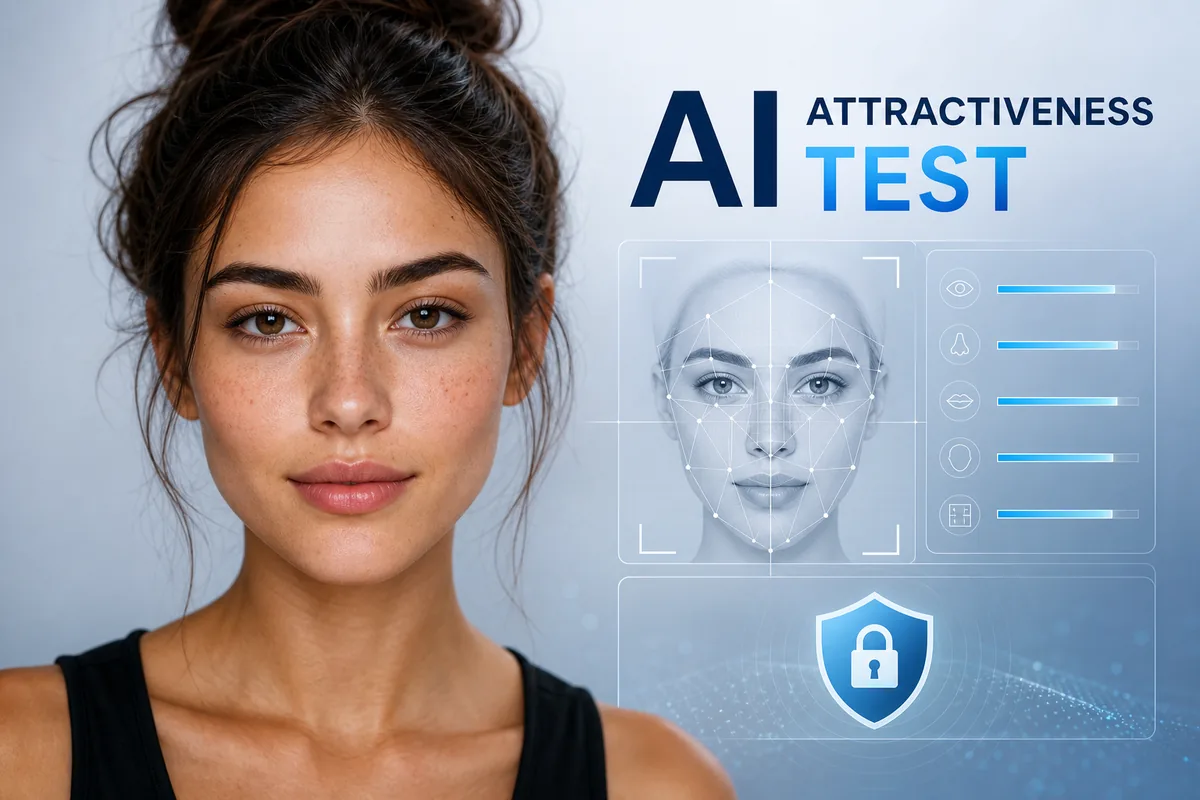
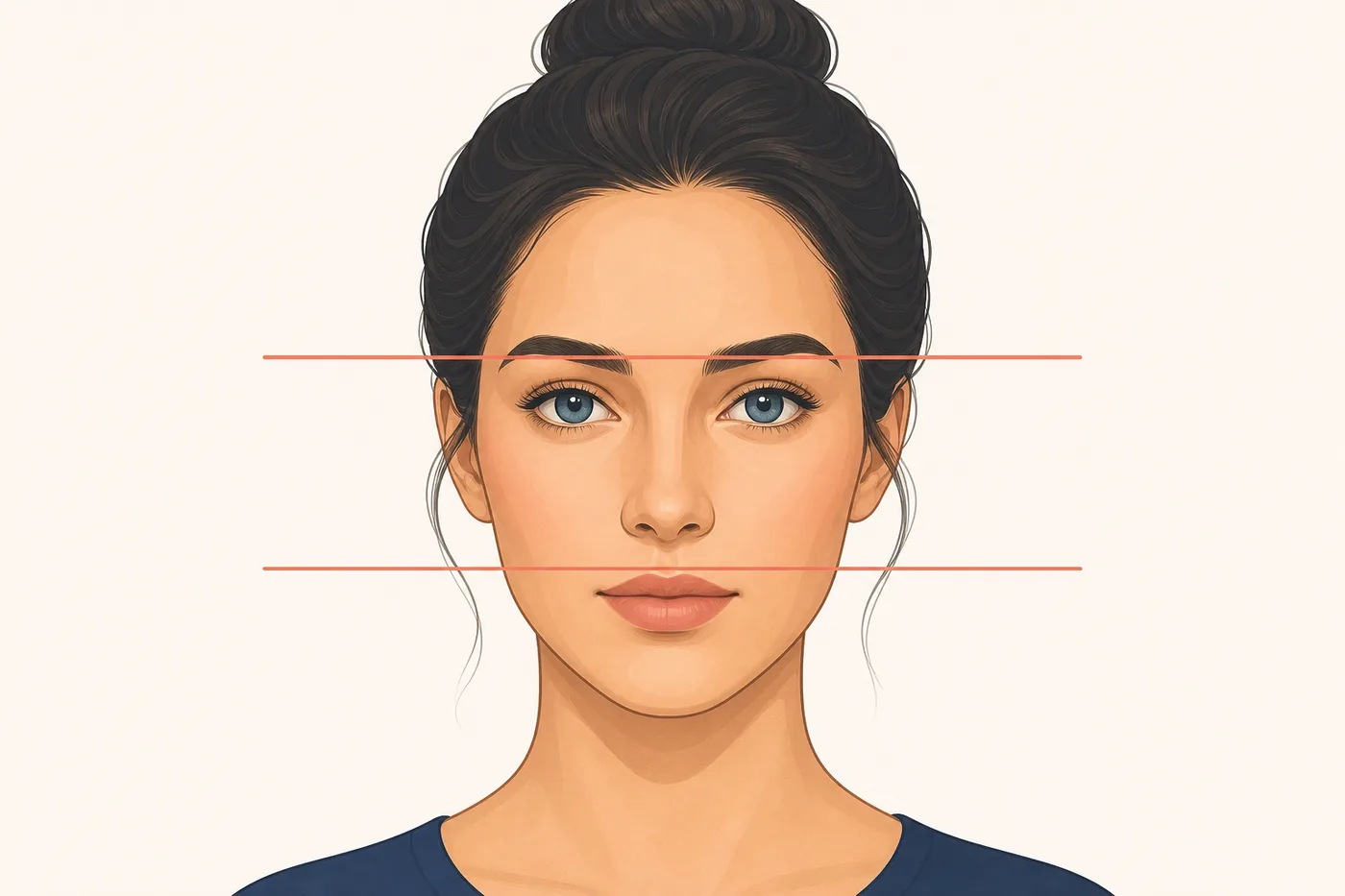
Most AI face-rating systems start by detecting a face and locating landmarks around the eyes, brows, nose, mouth, jaw, and outline. They may calculate distances, angles, balance, visible skin texture, and the amount of the frame occupied by the face. Some systems also classify presentation signals such as lighting, sharpness, expression, and background.
A beauty score calculator may combine those signals into one result, while another service may show symmetry, proportion, skin, or photo-quality subscores. The categories sound scientific, but the exact formula is usually proprietary. A score can describe a model output without proving that the model uses a valid or universal definition of beauty.
The number does not directly measure personality, humor, kindness, voice, style, confidence, cultural context, or the chemistry of an in-person interaction. It also cannot know whether a photo represents how you normally look. Those missing variables are reasons to keep the score narrow and practical.
How an AI beauty score is produced
Different vendors use different architectures, but a facial attractiveness test usually follows a recognizable pipeline. Knowing the stages helps you see where uncertainty enters the result.
1. Face detection
The system finds a face and checks whether it is large and clear enough to analyze. A turned head, sunglasses, hair across the eyes, severe shadow, or several faces can reduce the usable signal.
2. Landmarks and proportions
The model estimates points around visible features and calculates relationships such as spacing, alignment, and face proportions. These are image measurements, not a complete description of a person.
3. Photo-quality signals
Lighting, blur, lens distortion, white balance, crop, and expression can be included because they change how a portrait is perceived. A phone selfie may therefore behave differently from a portrait-lens photograph.
4. Model comparison
The extracted signals are compared with patterns learned from previously labeled images. The labels may come from a narrow sample, a particular rating task, or a vendor-defined aesthetic target.
5. Score calibration
The service maps the model output onto a visible scale. A 7 out of 10 on one site does not necessarily equal a 7 on another because the range, reference set, and calibration can differ.
How to read score ranges without treating them as facts
A range is useful only when you know what it compares. Some tools spread results across a 1–10 scale; others cluster most users near the middle or show a percentile against a reference set. Without the reference distribution, a number is difficult to compare across services.
Read a result in layers. First check the image conditions and whether the face was detected correctly. Next read any sub-score explanation. Then ask whether the change matters for your purpose, such as choosing a clearer profile photo. A small difference may be noise, while a large difference after a lighting change may reveal a presentation issue.
| Result format | What it can show | What it cannot prove |
|---|---|---|
| 1–10 score | A rough comparison within one service | A universal ranking of people |
| Percentage | How the output is scaled by that model | A scientific probability of beauty |
| Percentile | Position against a stated reference group | A fair comparison when the group is unknown |
| Sub-scores | Which visible signals the service emphasizes | That the categories are complete or unbiased |
| Letter grade | A quick summary for a defined task | A stable identity or social prediction |
Do not turn a range into a ranking
A score range can help you compare two presentation choices. It cannot rank people fairly across cultures, cameras, ages, or personal preferences.
Why the same face gets different scores
A face rating is sensitive to the pixels it receives. Even when your facial structure is unchanged, the model may see a different apparent jawline, eye opening, skin contrast, or face shape after the camera moves. This is normal for an image-based estimate.
To interpret a change, record what changed in the photo before assuming the model changed its mind. Compare like with like: same distance, similar lighting, similar expression, and a crop that gives the face similar space.
| Photo change | What the model may see | Better comparison question |
|---|---|---|
| Hard side light | More shadow and contrast | Is the face still clear? |
| Wide-angle selfie | Different apparent proportions | Are camera distances similar? |
| Tight crop | Face occupies more of the frame | Is the crop appropriate for the profile? |
| Strong filter | Altered texture and color | Would viewers see the same image? |
| New expression | Changed eye, mouth, and cheek cues | Which expression fits the context? |
| Motion blur | Less reliable landmarks | Did the tool show a quality warning? |
If a score changes dramatically under controlled conditions, treat that as a reliability warning. It may reflect a sensitive model, a hidden quality threshold, or a result that is designed for entertainment rather than measurement.
Accuracy, bias, and what a score cannot measure
There is no single accuracy percentage for every beauty score. A vendor would need to define the target, describe the reference ratings, report the population tested, and show how results perform on new images. A polished interface or a decimal-rich score does not provide that evidence by itself.
Training data can also shape the output. If the examples overrepresent one region, age group, skin tone, gender expression, camera style, or aesthetic preference, the model may reward those patterns. That is a data and design limitation, not a defect in the person being rated.
A model can be consistent and still be narrow. Consistency means it repeats its own rules; it does not mean those rules capture universal attractiveness. Use the result for a bounded task such as checking clarity, balance, or photo selection, and keep human judgment in the loop.
The missing human context
Real attraction includes movement, conversation, expression over time, personal style, culture, and shared context. A still image can offer useful presentation feedback, but it cannot observe those dimensions. Avoid language that turns an algorithmic score into a statement about normality or personal value.
A repeatable way to compare photos
If your goal is to choose a profile photo, use the beauty score as one signal in a small, controlled comparison. The method below reduces noise and keeps the decision connected to a real use case.
- Choose three to five ordinary photos that you are comfortable uploading. Remove images with other people, documents, or sensitive background details.
- Keep the question fixed. For example, ask which image is clearest and most approachable, rather than asking which photo proves you are most attractive.
- Standardize the crop and export quality. Do not compare a full portrait with a face-filling wide-angle selfie and then treat the result as a face-only test.
- Upload one image at a time and record the score, visible sub-scores, and any quality warning. Do not rely on memory or chase a higher number through endless retakes.
- Review the images yourself at the size people will see them. Check eye contact, expression, lighting, background, and whether the photo still feels like you.
- Choose the image that serves the context. A slightly lower score can be the better dating, professional, or social profile photo if it is clearer and more natural.
This process turns a number into a decision aid. It does not make the decision objective, but it makes the comparison more transparent and less vulnerable to random photo differences.
Privacy and safer use
A face image is personal data even when a site does not ask for your name. Before using an AI beauty score service, look for a clear retention period, training policy, third-party processing explanation, account requirement, result visibility, and deletion path. HTTPS protects the connection; it does not answer what happens after the upload.
- Use a copy and crop out other people, children, badges, documents, addresses, and distinctive private surroundings.
- Prefer an ordinary portrait over an intimate image or identity document. Upload only what the task needs.
- Check whether uploads train or improve the model, and look for a real opt-out instead of a vague privacy promise.
- Avoid public result links and do not reuse a password if an account is required.
- Use the documented deletion control after the comparison, especially when the image was sensitive.
Privacy reminder
For this site's stated data practices, read the RateMyPhoto.org Privacy Policy
Useful ways to apply the feedback
A beauty score is most defensible when the task is specific and the stakes are low. Keep the purpose tied to the image, not to a judgment about who you are.
Choose a profile-photo crop
Compare framing and face visibility for a dating, professional, or social profile. Keep the question about clarity and approachability.
Check lighting and angle
Use a score change as a prompt to inspect shadows, camera height, lens distance, and expression before changing your appearance.
Learn model behavior
Run a small controlled comparison to see how a service reacts to blur, filters, or crop. Treat the output as a model response, not a fact.
Plan a better portrait
Combine the score with human feedback about context, style, and comfort. A photo that feels authentic can be more useful than one that merely scores higher.
For a deeper explanation of the scoring pipeline, read how AI rates your photo.
When you want to inspect a real image, try the AI attractiveness test with a low-sensitivity photo.
Bottom line
A beauty score can organize useful feedback about one face photo, especially when you are comparing lighting, crop, angle, or expression. The number becomes misleading when it is treated as a universal beauty scale, a prediction of social success, or a permanent judgment.
Read the scale, inspect the image conditions, look for bias and privacy limits, and compare photos with a fixed question. If you want to see how a particular image is analyzed, use the site's AI attractiveness test with a low-sensitivity photo and keep the result in perspective.
Frequently asked questions
About the author
Sophie Laurent
Sophie Laurent writes about practical AI tools, digital identity, profile photography, and online privacy. Her guides help readers use automated scores as useful photo feedback without treating a model output as a personal verdict.
References and further reading
Last updated: November 16, 2026