How to Be Photogenic: 9 Practical Tips for Better Photos
Improve lighting, camera distance, posture, and expression without trying to change your face.
Quick answer
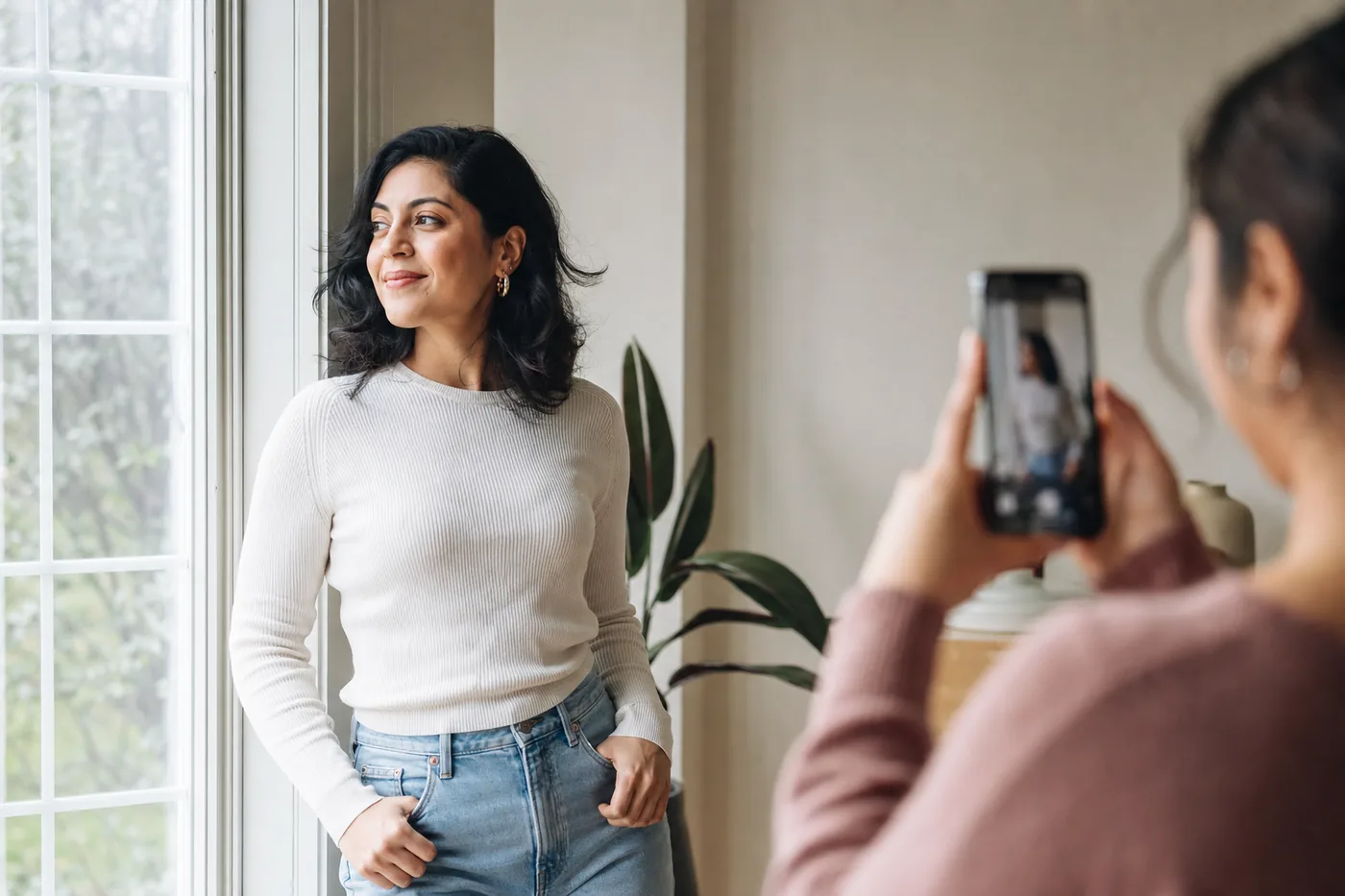
To be more photogenic, use soft light from slightly in front of you, keep the camera about an arm's length or farther away, place it near eye level, turn your torso 20–45 degrees, relax your shoulders, and create a fresh expression just before the shutter. Take short bursts while making small adjustments instead of holding one rigid pose.
Table of Contents
Being photogenic is not a fixed physical trait. A photograph compresses a three-dimensional face into a flat frame, freezes one fraction of a second, and changes proportions depending on light, lens distance, angle, and timing.
This guide focuses on controllable photography choices. It gives you a repeatable routine for profile pictures, dating photos, professional portraits, group shots, and casual selfies.
What Does It Mean to Be Photogenic?
A photogenic result is recognizable, balanced, and expressive after the camera has changed depth, scale, and timing. It is closer to a photography skill than a beauty category.
The biggest improvements usually come from four variables you can control before the shutter.
Light direction
Soft light slightly above and in front of the face defines features without deep shadows.
Camera distance
More distance reduces wide-angle distortion. Crop later instead of placing the phone inches from the face.
Body position
A small torso turn and relaxed shoulders create shape while keeping the face connected to the camera.
Expression timing
A fresh expression made just before the photo looks more natural than a smile held for twenty seconds.
Fix the Camera Setup Before Your Pose
Change one variable at a time so you know what actually helped.
| Problem | Try this first | Why it helps |
|---|---|---|
| Face looks stretched | Move the camera farther away and use 2× or portrait zoom | Distance reduces wide-angle distortion |
| Eyes look dark | Turn toward a window or open shade | A larger soft source puts light back into the eyes |
| Jawline disappears | Lengthen the neck and move the forehead slightly forward | This separates the chin without an exaggerated pose |
| Photo feels stiff | Exhale, drop the shoulders, and move between frames | Small motion prevents a frozen expression |
| Background distracts | Step away from the wall and simplify the frame | Separation keeps attention on the face |
A Nine-Step Routine for Better Photos
The first five steps solve technical problems; the last four improve expression and variety.
- 1. Find soft light. Stand near a window, doorway, or open shade. Avoid a bare ceiling light or harsh midday sun.
- 2. Clean the lens. A fingerprint creates haze and lowers contrast around bright highlights.
- 3. Increase camera distance. Ask the photographer to step back, or use a timer and support for more natural proportions.
- 4. Start near eye level. Test a few centimeters above or below, but avoid extreme high or low angles.
- 5. Turn, then reconnect. Angle the torso 20–45 degrees and bring the face back toward the lens without twisting the neck.
- 6. Give your hands a quiet job. Use a pocket, jacket edge, table, or relaxed arm position.
- 7. Relax before the shutter. Exhale, loosen the mouth, lower the shoulders, blink once, then look back at the lens.
- 8. Create a real expression. Think of a person or moment instead of commanding yourself to smile.
- 9. Shoot short bursts. Make tiny changes to chin height, eyes, shoulders, and expression across five to ten frames.
How to Pose Without Looking Posed
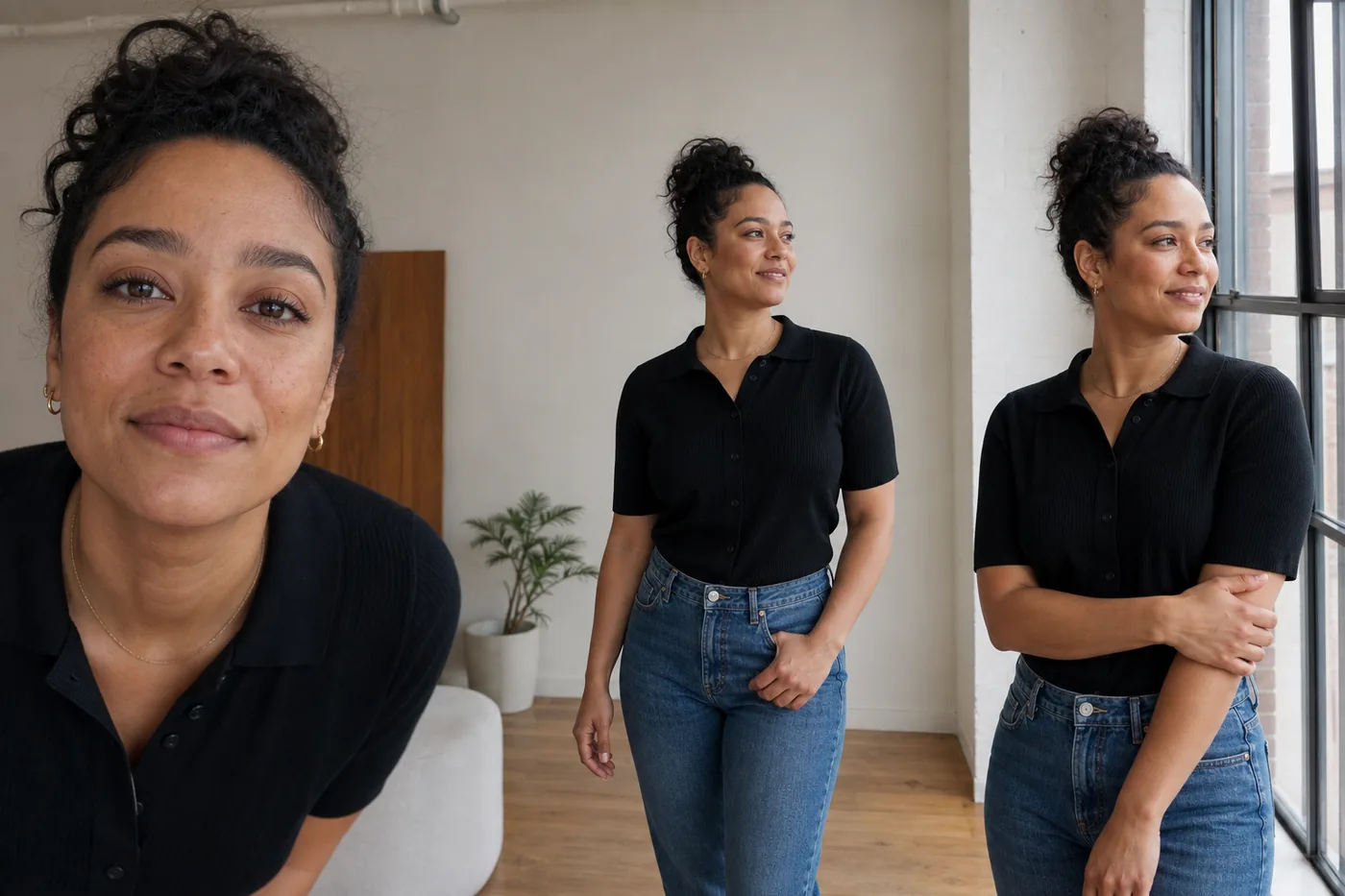
A natural photo usually contains a little movement. Shift weight, turn the shoulders, look away, then return your eyes to the lens. Capture the transition as well as the settled frame.
For selfies, keep the phone farther away when possible and use a timer, remote, or stable surface.
- Keep the lips relaxed before choosing a smile.
- Bring the chin slightly forward, not sharply down.
- Leave a small gap between the upper arm and torso.
- Try one neutral frame, one soft smile, and one bigger expression.
- For group photos, turn toward the group but keep your face visible.
Why You May Look Different in Photos
Mirrors reverse your familiar view, while photos freeze one instant and may use a close wide-angle lens. A bad frame is not a more truthful version of you.
- Holding the phone too close
- Standing under a small ceiling light
- Pressing the chin down
- Watching yourself on screen instead of the lens
- Holding one smile until it looks tense
- Using heavy filters
- Judging one frame instead of a short sequence
Practice With a Repeatable Test
Use one location and take three sets: camera close, camera farther away, and camera farther away with a slight body turn. Keep clothing and background unchanged, then compare proportions, eye light, posture, and expression.
When you have two or three strong candidates, an AI photo rater can help compare lighting, clarity, crop, and presentation. Treat feedback as a checklist, not a verdict on appearance.
Compare your strongest photosFrequently Asked Questions
Can anyone learn how to be photogenic?
Most people can improve their photos by controlling light, distance, angle, posture, and timing. Learn the setup that keeps you recognizable and relaxed.
Why do I look better in the mirror than in photos?
You are familiar with your reversed mirror image, while a photo is not reversed and may use a close wide-angle lens.
What is the most flattering camera angle?
Start near eye level with the camera farther away. Extreme angles distort proportions.
How can men be more photogenic?
Use the same fundamentals: soft light, more distance, relaxed shoulders, a slight torso turn, and several natural expressions.
Should I use portrait mode?
Portrait mode can simplify the background, but good light and camera distance matter more than artificial blur.
How many photos should I take?
Take bursts of five to ten, review one variable, and repeat. Hundreds of identical shots make selection harder.
The practical takeaway
Being more photogenic is mostly about making the camera behave more like normal vision: use softer light, add distance, avoid extreme angles, relax the body, and capture a fresh expression. Judge a sequence instead of one unlucky frame.