Am I Pretty? How AI Beauty Tests Read a Photo
A calm, practical guide to pretty test scores, photo quality, bias, privacy, and better ways to compare portraits

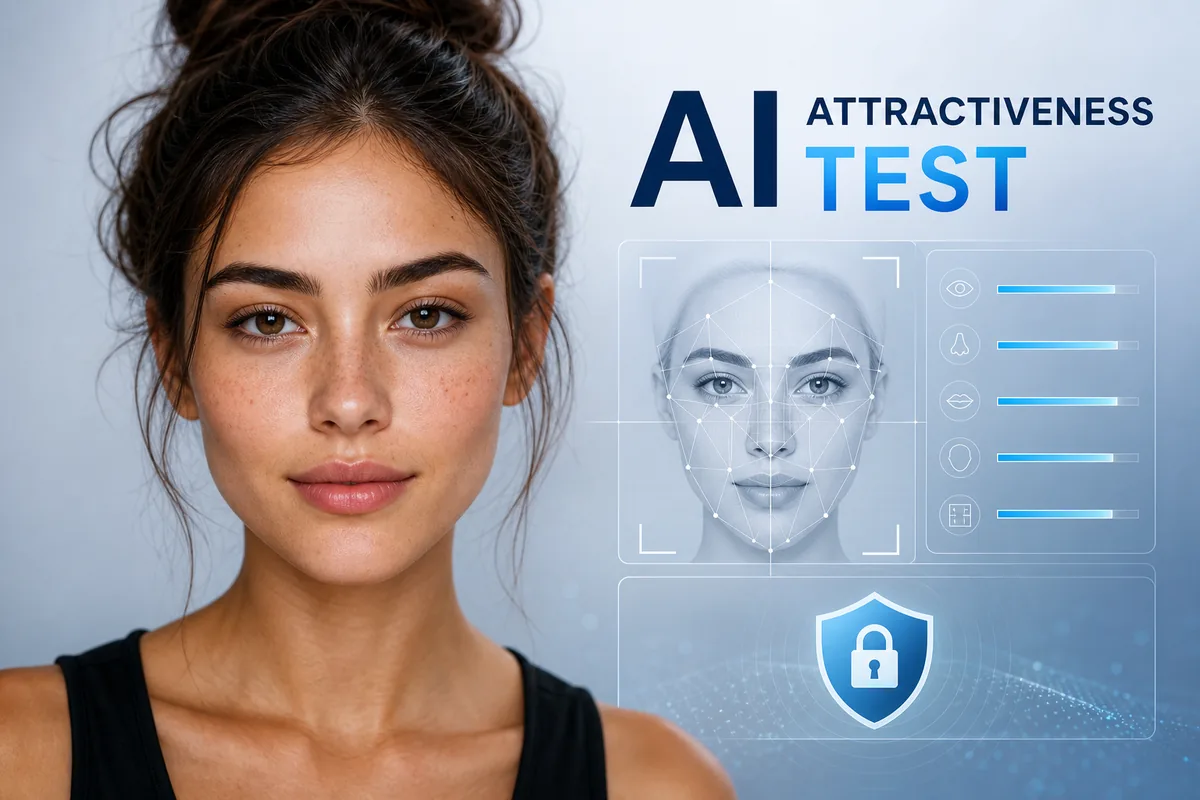
Table of Contents
If you search for “am I pretty?” you may want a quick, reassuring answer. An AI beauty test can provide a structured response, but it is important to understand what the response represents. The model sees one image with one expression, one lens, one angle, and one lighting setup. It does not see your face in motion, your voice, your style, your humor, or the way people react to you in a real conversation.
That limitation does not make a pretty test useless. Used carefully, it can help you compare profile photos, notice when lighting hides your features, or understand why a clear portrait performs better than a blurry selfie. The score becomes more useful when you look for patterns across several similar images rather than reacting to the highest or lowest result.
The goal is practical feedback without treating an algorithm as a judge of your worth.
What Does an Am I Pretty Test Measure?
An am I pretty test is a photo analysis tool that estimates how a portrait matches visual patterns learned from previously labeled images. Depending on the service, the result may be called a pretty score, beauty score, face rating, attractiveness rating, or a number on a pretty scale. The label changes, but the basic input is still a single picture.
Most systems first detect a face and locate landmarks around the eyes, brows, nose, lips, chin, jaw, and outline. They may then estimate balance between the left and right sides, distances between features, face-to-frame proportions, sharpness, exposure, and expression. Some tools also include skin visibility or background quality. Those signals are measurable image properties, not a complete definition of beauty.
A responsible reading is: “This photo contains patterns that the model often associates with this score.” It is not: “This is my objective attractiveness.” Personality, culture, fashion, movement, confidence, warmth, and personal taste all matter to human attraction but are missing from a static rating.
Short Answer
A pretty test estimates how one photo aligns with a model's visual patterns. It cannot decide whether you are valuable, lovable, or attractive in every real-world situation.
How a Pretty Test Works
Different providers use different models, but a typical AI beauty test follows a readable sequence.
1. Face detection
The system checks whether it can find one clear face. A tiny face, a strong side profile, sunglasses, or deep shadows leave the model with less reliable evidence.
2. Landmark mapping
The model places reference points around the eyes, eyebrows, nose, mouth, cheeks, chin, and jaw. These points help it describe visible shape and spacing without understanding the person behind the image.
3. Proportion and balance estimates
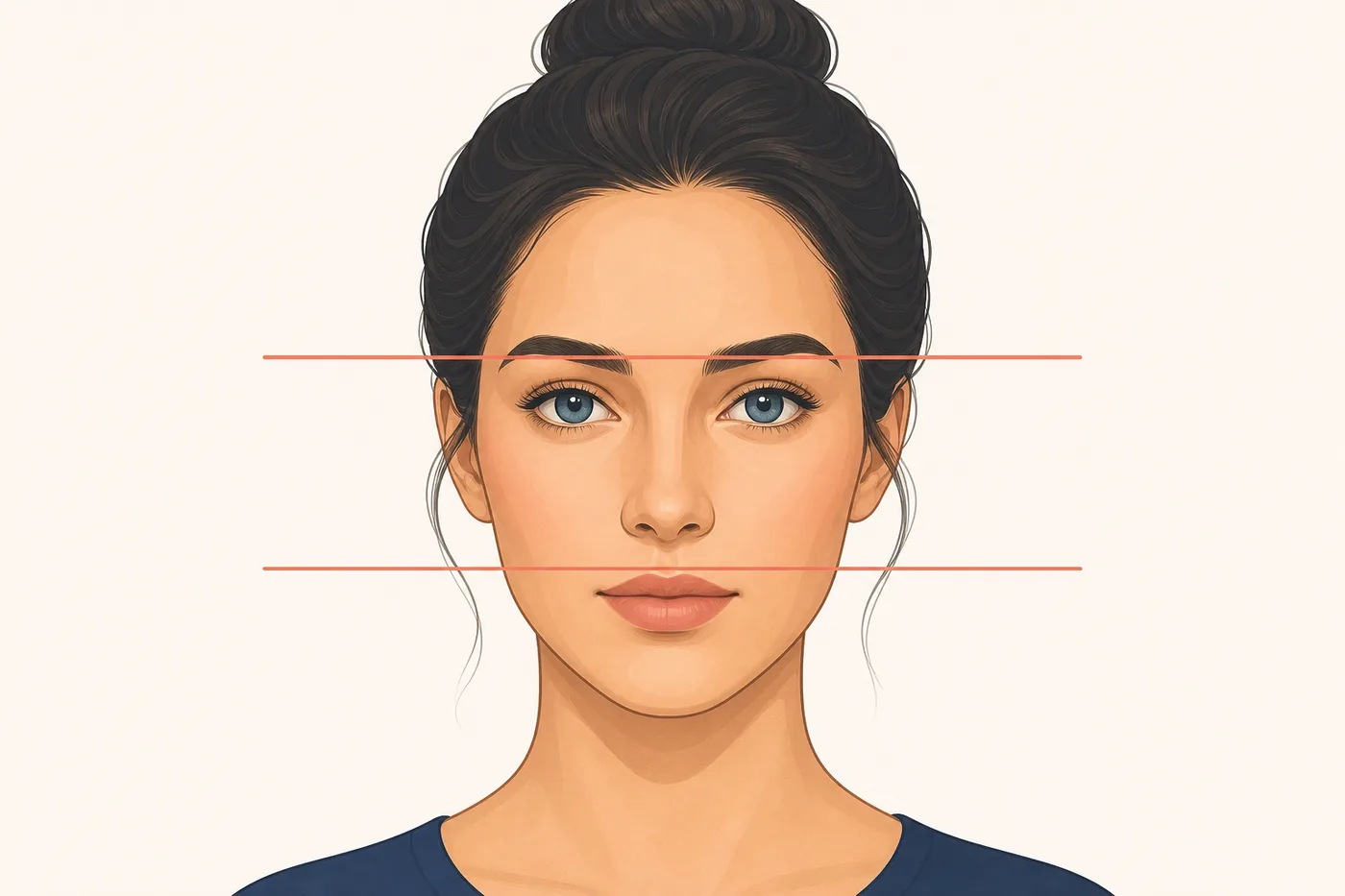
The test may compare facial thirds, eye spacing, left-right balance, face width, and the relationship between the face and the frame. These are reference patterns, not universal rules.
4. Photo quality checks
Blur, harsh shadows, lens distortion, compression, and a busy background can change the information available to the model. A lower score may describe a difficult input rather than a different face.
How to Read a Pretty Test Score
There is no universal scale. One service may call a 7 average-to-good while another uses a 100-point score. Use the bands below as a calm interpretation framework, not a scientific ranking.
| Typical range | What the photo may signal | A useful next step |
|---|---|---|
| 8–10 / high | The image looks clear, balanced, and close to patterns the model rewards. | Keep the setup as a reference and compare another honest portrait. |
| 6–7.9 / middle | The portrait reads as generally clear with mixed or average signals. | Check light, camera distance, and expression before changing anything else. |
| 4–5.9 / mixed | Some visible cues work while others may be hidden by the photo conditions. | Retake the photo in softer light with a clean lens and a simpler frame. |
| 1–3.9 / low | The input may be blurry, shadowed, distorted, obstructed, or outside the model's familiar patterns. | Review the image first; do not treat the number as a personal verdict. |
The most informative comparison is usually within the same tool and under similar conditions. Take two or three photos with the same camera distance and lighting, then change one variable at a time. If the score moves sharply after a lighting change, the image setup is part of the result.
Read the pattern, not the verdict
A stable range across several clear portraits is more useful than one dramatic number. A low result should prompt a photo-quality check before a personal conclusion.
Why Pretty Test Results Change
The model cannot separate your face from the photograph that contains it. Small changes in the image can alter the landmarks and proportions it can read.
Lighting direction
Hard side light can hide one eye, deepen a cheek shadow, or flatten texture. Soft light from in front makes both sides easier to compare.
Camera distance and lens
A close wide-angle selfie can enlarge the nose and center of the face. Stepping back and cropping later usually creates a more natural portrait.
Head angle and expression
A tilt, squint, tense mouth, or large smile changes visible distances. A neutral, relaxed expression makes repeated comparisons easier.
Obstructions and filters
Sunglasses, hands, hair across the face, and strong beauty filters change or hide landmarks. The score describes the edited input, not an unedited version of you.
These factors also explain why a professional headshot and a late-night mirror selfie can receive very different results. The difference is not proof that your appearance changed; it is evidence that the visual conditions changed.
How to Run a Fairer Am I Pretty Test
You do not need a studio or a perfect face. You need a repeatable setup that gives the model clear, comparable input.
- Use one person per image and choose a photo where the whole face is visible.
- Stand near a window or use soft front light instead of a bright light directly above you.
- Hold the camera at eye level, step back from a close selfie, and keep the lens clean.
- Start with a relaxed expression and avoid changing several variables at once.
- Compare two or three photos in the same tool and write down the repeated feedback. Stop if the score is making you anxious; the tool is optional feedback, not a requirement.
Privacy Checks Before Uploading a Face Photo
A face photo can be sensitive personal data. Before using an AI pretty test, read the service's policy instead of relying on a short “private” badge.
Questions worth answering
- Does the site say whether images are deleted after analysis, and on what schedule?
- Are uploads used to train models, shared with vendors, or connected to an account?
- Can you use the service without creating a profile or giving unnecessary contact details?
- Does the page use HTTPS and explain who operates the service?
- Are you uploading a photo you own or have permission to use?
Privacy Note
Treat a face test like any other image upload: share the minimum, avoid other people's faces, and choose a service that explains storage and deletion in plain language. Read the Privacy Policy before uploading sensitive images. Privacy Policy
Bias and the Limits of Objective Beauty
An AI beauty score reflects its training data and design choices. If the examples used to train a model overrepresent one region, age group, skin tone, camera style, or aesthetic preference, the output may favor those patterns. A polished number does not remove that subjectivity.
Cultural ideas about beauty also change over time and between communities. Symmetry and proportion can be measured, but their meaning is not identical for every person. A face that falls outside a model's most familiar examples may receive a lower score without being less appealing to real people.
Look for tools that describe limits, avoid insulting labels, and give photo-specific suggestions. Use the result to improve clarity or compare images, not to rank people or make decisions about health, character, dating worth, or identity.
Useful Pretty Test Feedback
Use feedback for practical photo decisions.
For the scoring process behind photo ratings, read how AI rates your photo.
Want a face-focused comparison? Try the AI face rating tool.
The Practical Answer to “Am I Pretty?”
An AI pretty test can show how one portrait aligns with visible patterns such as balance, proportions, lighting, sharpness, and expression. It cannot capture the full experience of attraction, and it cannot turn a complex person into an objective score.
Use the result as a repeatable photo experiment: keep the setup fair, compare a small set of images, read the explanation, and protect your uploads. The best outcome is a clearer photo and a better understanding of the model's limits, not a number that follows you around.
Frequently Asked Questions
About the Author
Sophie Laurent
Sophie Laurent writes about practical AI tools, digital identity, profile photography, and online privacy. Her reviews explain what a system can observe without turning an algorithmic score into a judgment about a person.
References and Further Reading
Last updated: October 25, 2026